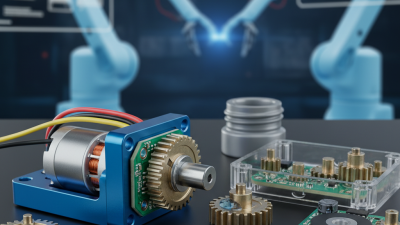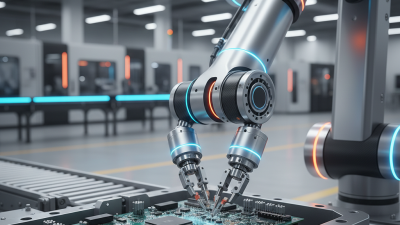
As we advance into 2026, robot servo technology is on the cusp of remarkable innovation. These innovations are crucial for enhancing efficiency in various fields. Industries like manufacturing, healthcare, and automation are embracing robot servos to improve their operations.
Current trends reveal that manufacturers are focusing on precision and speed. New designs allow for more accurate movements. As a result, robots are becoming more adaptable. This flexibility enhances their utility in complex environments. However, the integration of these advancements is not without challenges.
There are still underlying issues to consider. High costs can limit access for smaller companies. Moreover, maintenance can be tricky with advanced systems. Understanding these potential pitfalls is important. The future of robot servos promises great potential, but it also requires careful navigation of these obstacles.
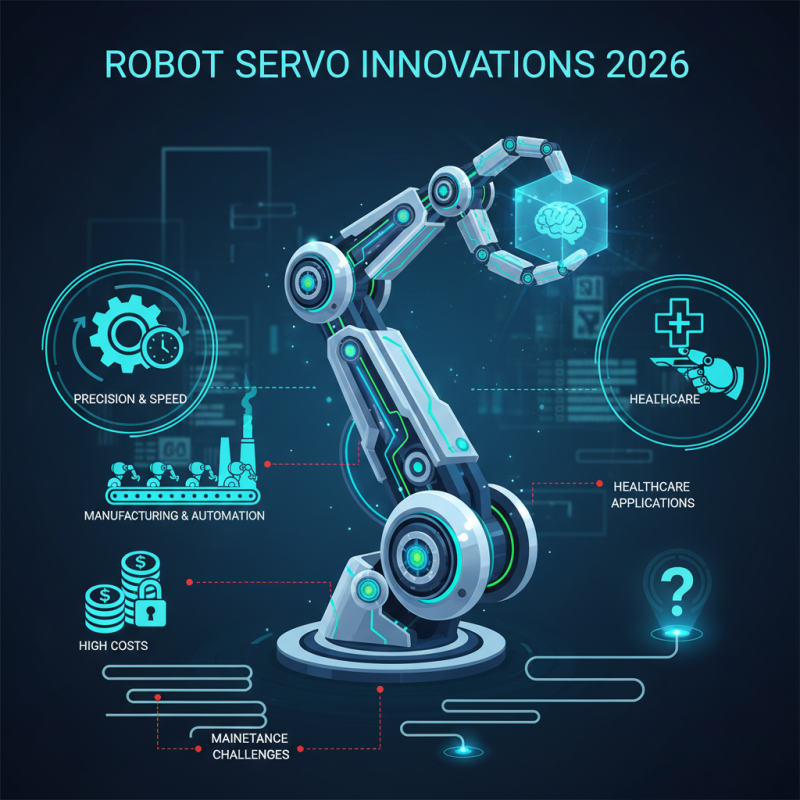
In 2026, advancements in robot servo technology are set to reshape industries. Engineers predict a significant shift towards more intelligent servo systems. Studies indicate a 25% increase in efficiency due to innovations in AI and machine learning integration. These technologies allow servos to respond better in real-time, adapting to complex environments.
A critical trend is increased energy efficiency. Data shows that energy-efficient servos could cut operational costs by up to 30%. This change is crucial for companies focused on sustainability. Environmental concerns drive the demand for better energy use.
Tip: Regularly assess the compatibility of new technologies with your existing systems. This will ensure a smoother transition and reduce downtime. Another tip: invest in training for staff. Understanding new servo tech is vital for maximizing benefits. As industries evolve, staying informed is crucial, but it’s also important to consider how these changes impact daily operations. It's easy to overlook integration challenges amid rapid advancements.
The field of servo motors is evolving rapidly. Innovations in design focus on improving efficiency and performance. Advanced materials and smart technologies enhance precision and reduce weight. For instance, recent reports suggest that servo motors can now achieve 15% more efficiency compared to previous models. This increase significantly impacts industrial automation and robotics.
Tip: When selecting a servo motor, consider its power-to-weight ratio. A lighter motor can translate to better overall system performance.
Moreover, energy consumption is a critical issue. A 2023 study indicated that the latest servo systems consume up to 30% less energy. This efficiency leads to reduced operational costs. Users should also be aware of potential trade-offs. Some designs may prioritize speed over torque, which might not suit every application.
Tip: Evaluate your project's specific needs. Different applications require varying torque and speed configurations.
As technology progresses, we may see even more breakthroughs in servo motor efficiency. Continuous improvement allows industries to rethink design and operational strategies. Keep an eye on these trends to stay competitive.
| Innovation | Description | Efficiency Improvement (%) | Application Field |
|---|---|---|---|
| High Torque Density Servos | Advanced designs that provide higher torque in a smaller footprint. | 25% | Robotics and Automation |
| Smart Servo Technology | Integration of sensors and control systems for real-time adjustments. | 30% | Industrial Robotics |
| Energy Harvesting Servos | Servos that utilize energy from their environment to improve efficiency. | 40% | Autonomous Drones |
| Modular Servo Systems | Flexible designs that allow easy customization and scaling. | 20% | Manufacturing |
| Enhanced Feedback Control | Utilization of advanced algorithms for precise motion control. | 35% | Medical Robotics |
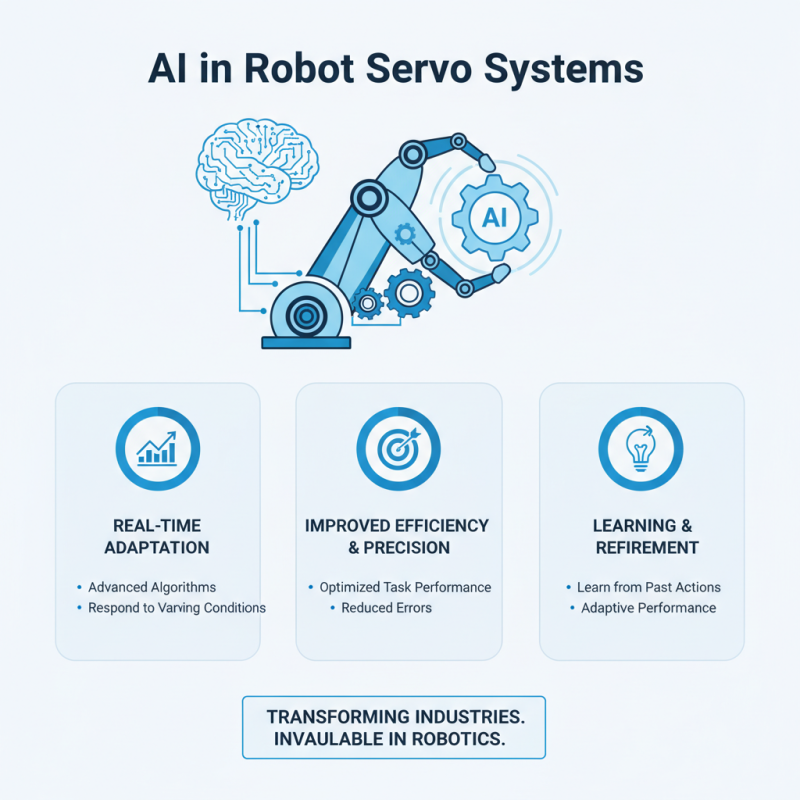
The integration of AI in robot servo systems is transforming industries. With advanced algorithms, servos can now adapt in real-time to varying conditions. This leads to improved efficiency and precision in tasks. AI-enhanced servos can learn from past actions, refining their performance over time. Such adaptability makes them invaluable in robotics.
Imagine a robotic arm that adjusts its movements based on the weight of an object it handles. Traditional systems often struggle with such variability. However, AI-infused servos can manage unpredictable changes. They analyze data quickly, making split-second decisions. This capability is not flawless; sometimes, they misinterpret data. These moments encourage further enhancements. Embracing imperfections can lead to innovative solutions.
Another aspect is the potential for collaborative robots, or cobots. These machines work side by side with humans, requiring safe and responsive interactions. AI allows these servos to gauge human presence, adjusting movements to ensure safety. Yet, there are challenges in ensuring reliability. Trust must be built between humans and machines. Continuous feedback loops and improvements are necessary. The future of robot servo systems is promising, yet requires careful evaluation.
The rise of robotics significantly affects automation and Industry 4.0. A recent report indicates that the global industrial robotics market will exceed $70 billion by 2026. This rapid growth exemplifies the increasing reliance on automated systems across various sectors.
As industries adopt robotic solutions, data shows that operational efficiency can improve by up to 30%. Yet, the transition isn't always seamless. Many companies face challenges regarding integration and workforce adaptation. Workers may fear job loss, leading to resistance against new technologies. It's vital for organizations to address these concerns through training and clear communication.
Additionally, a study found that nearly 40% of companies struggle with understanding the full capabilities of their robotic systems. This knowledge gap can hinder optimal usage. While robotics offers immense potential, firms must reflect on their strategies. They should foster collaboration between humans and machines to unlock maximum value. Balancing innovation with workforce support is key to thriving in this evolving landscape.
Robot servos are evolving quickly, driving innovation across various sectors. In manufacturing, they're enhancing precision and speed. These servos can handle complex tasks, leading to improved quality control. Imagine a factory floor where robotic arms effortlessly assemble intricate components. This minimizes human error, but can create challenges for workforce adaptation.
In healthcare, robot servos play a crucial role in surgeries. They assist surgeons with minimally invasive procedures. These systems provide stability and precision that is hard to achieve manually. However, there are concerns about over-reliance on technology. Human oversight is essential to ensure safety.
The agricultural sector is also seeing a shift. Robots equipped with advanced servos can plant and harvest crops. This technology boosts productivity but raises questions about job displacement. Farmers must adapt to this new reality while also addressing sustainability issues. Each application poses unique challenges and opportunities in a rapidly changing world.