What Are the 2026 Top Servo Robot Seam Tracking Systems?
Choosing the 2026 top servo robot seam tracking systems requires more than comparing motion speed or marketing claims. A reliable system must detect joint positions, correct tool paths, and maintain stable welding quality under changing conditions. In practical workshops, sensors face spatter, heat, vibration, reflective metal, and uneven part fit-up. These details often decide whether a system performs well beyond a laboratory demonstration.
This guide examines leading servo robot seam tracking solutions through measurable criteria. It considers sensor accuracy, response time, servo synchronization, controller compatibility, installation effort, and long-term maintenance. Systems using laser vision may provide precise profile data, while touch sensing can offer dependable feedback in simpler applications. The best choice depends on material, joint design, production volume, and acceptable downtime. There is no universal winner.
Real-world testing remains essential. A system that performs smoothly on straight carbon-steel joints may struggle with aluminum distortion or narrow fillet welds. Operators should review sample welds, recovery behavior, calibration steps, and software usability before purchasing. Even respected equipment can require careful tuning. That is an important limitation. Therefore, this overview treats servo robot seam tracking as an engineering decision, not a popularity contest. It highlights systems with credible technical strengths while recognizing integration risks, changing factory conditions, and the need for evidence from actual production environments.
Servo Robot Seam Tracking Systems: Definition and Core Functions
What Are the 2026 Top Servo Robot Seam Tracking Systems?
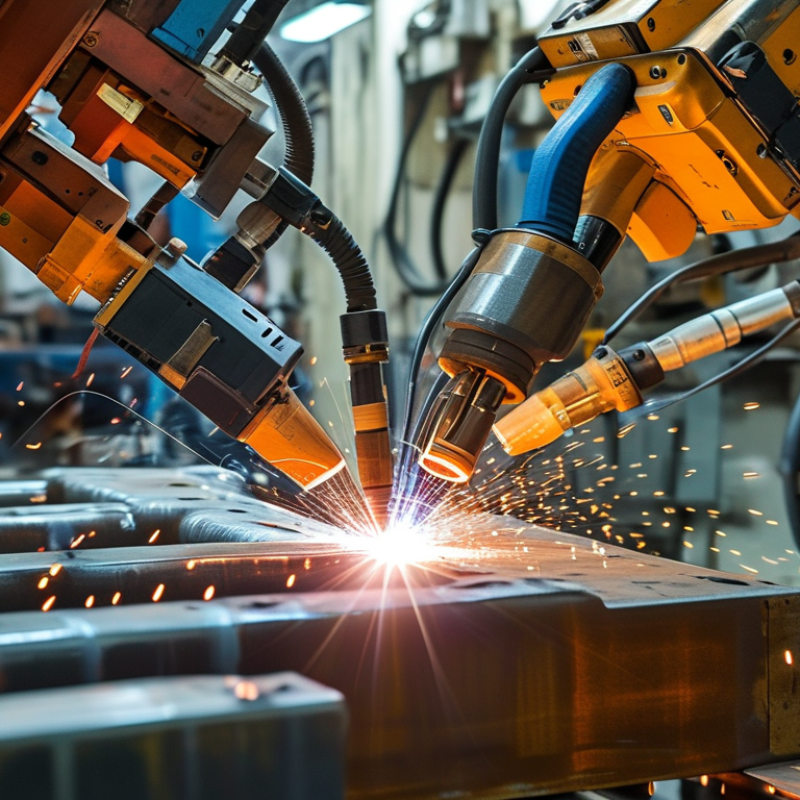
Servo robot seam tracking systems are control technologies that help robotic welders follow a joint accurately. They combine sensors, servo motors, motion controllers, and software. The sensor detects the seam’s position, height, width, or gap. The controller compares this information with the programmed path. It then sends small corrections to the robot’s movement. This process reduces tracking errors caused by part distortion, fixture variation, or thermal expansion.
The strongest 2026 systems focus on stable sensing and responsive correction. Common functions include real-time seam detection, automatic path adjustment, weld position monitoring, and fault alerts. Some systems also record production data for quality checks.
Laser sensing can identify narrow joints, while touch sensing may support simpler applications. In my experience, sensor selection depends heavily on surface condition, joint design, and welding speed. A sophisticated system can still perform poorly with smoke, spatter, vibration, or weak calibration.
Calibration still matters. Operators should check sensor alignment before production and inspect tracking results during scheduled maintenance. A practical test uses sample parts with different gaps and offsets. The system should correct these changes without creating sudden robot movements.
It is not magic. Even advanced control software may miss a seam when reflections, contamination, or damaged edges confuse the sensor. Engineers should review those failures instead of hiding them. That feedback improves setup standards, training, and long-term reliability.
How Servo Robots Detect and Follow Welding Seams
What Are the 2026 Top Servo Robot Seam Tracking Systems?
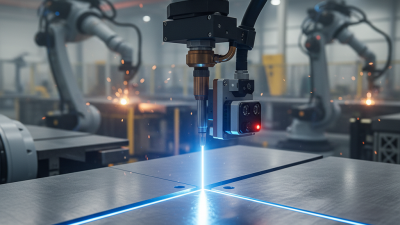
Servo robots detect welding seams through coordinated sensing, motion control, and real-time correction. Laser triangulation projects a narrow beam across the joint. A camera then measures reflected points, seam position, gap width, and height changes. Vision systems work differently. They compare live images with stored seam patterns and identify edges, corners, or irregular joints.
The controller converts these measurements into small torch movements. An encoder confirms the robot’s actual position. The servo loop then adjusts travel direction, welding angle, and lateral offset, often within milliseconds. This matters because a seam can shift several millimeters after clamping. The International Federation of Robotics reported 541,302 industrial robot installations worldwide in 2023. Its World Robotics 2024 report also recorded more than 4.2 million robots operating globally. That expanding installed base increases demand for reliable seam correction, not only faster arms.
In 2026, strong systems will likely combine laser sensing with touch or vision verification. Redundant sensing helps when smoke, spatter, or reflective steel disrupts a laser profile. However, no sensor is infallible. A shiny joint can fool a camera. Poor calibration can create precise mistakes. Engineers should test tracking accuracy across real gaps, heat distortion, and changing surface finishes. Reports from MarketsandMarkets identify machine vision as a growing industrial technology market, but adoption figures do not guarantee weld quality. Practical trials still matter.
A system that follows the wrong seam remains wrong.
Comparing the Top 2026 Seam Tracking System Features
In 2026, leading servo robot seam tracking systems compete through sensing accuracy, response speed, and practical integration. Vision-guided systems inspect joint position before welding begins. Laser-based systems measure seam deviation continuously during movement. Touch sensing remains useful when smoke, spatter, or poor lighting affects optical sensors. Each method suits different production conditions.
The strongest systems combine fast servo correction with multi-axis interpolation. A robot should adjust smoothly, not jerk across a curved joint. Look for tracking updates above 100 times per second, adjustable sensing ranges, and automatic gain control. These features help maintain bead placement around corners, gaps, and changing plate heights. Calibration also matters. A clear procedure can reduce setup time beside the workcell. Poor calibration causes expensive errors.
I have seen stable results depend on more than sensor resolution. Cable routing, torch stiffness, and fixture movement can influence accuracy. They are easy to overlook. Strong systems provide real-time deviation displays, fault logs, and recipe storage for repeated jobs. Interfaces should let technicians adjust offsets without rewriting robot programs. Dust protection and temperature tolerance deserve equal attention. No system handles every surface perfectly. Shiny metal can confuse optical sensing, while uneven joints may challenge touch probes. A reliable comparison should test actual materials, speeds, and seam shapes before purchase.
Selecting a Servo Robot Seam Tracking System for Industrial Use
In 2026, selecting a servo robot seam tracking system starts with the weld, not the catalog. Industrial teams should inspect joint type, material variation, heat, spatter, and required travel speed. Through practical commissioning, I have found that sensor stability often matters more than impressive resolution. Small errors compound. Choose a system that follows the seam without forcing constant operator correction.
Laser-based tracking can map changing joint positions, while touch sensing may suit simpler, enclosed processes. Ask for measured latency, tracking range, repeatability, and performance on reflective or contaminated surfaces. The controller must exchange data cleanly with the robot, welding power source, and production network. Check mounting rigidity, cable protection, calibration tools, and access for cleaning. These details decide uptime.
An industrial evaluation should use real test pieces, not only supplier demonstrations. Test gaps, misalignment, sharp corners, and warm workpieces under normal shift conditions. Record missed corrections, recovery behavior, operator workload, and inspection results. I would also question systems that require frequent manual tuning. That weakness may remain hidden during a short trial. Document training needs and spare-part availability before approval. Perfect tracking is unrealistic. A robust system should fail predictably, protect the weld, and make its limitations visible.