
What Is Stone Plastic Flooring and Is It Durable?

Stone Plastic Floor is often presented as a tough, modern alternative to ceramic tile, laminate, and traditional vinyl. Its rigid core usually combines limestone powder, PVC, and stabilizers. This structure gives the plank a firm feel underfoot. It can also resist dents, moisture, and everyday scuffs.

But “waterproof” does not mean indestructible. A dragged metal chair can still leave a mark. Poor subfloor preparation may cause clicking, separation, or uneven joints. Installation matters greatly. Clean the concrete, control moisture, and leave the recommended expansion space. Small details become visible in strong afternoon light.

Brett Miller, a respected flooring educator and technical expert, offers a useful perspective: “Durability is not a product label; it is a performance result.” That idea deserves attention. A thick wear layer may help, but household traffic, pets, sunlight, and cleaning habits also shape the floor’s life. One busy hallway is not the same as a quiet guest room.

This guide examines what Stone Plastic Floor contains, how it performs under real household pressure, and where its limits appear. It will consider scratch resistance, water exposure, installation quality, maintenance, and long-term value. The answer is not perfectly simple. Some products perform impressively, while cheaper options may disappoint sooner than expected.

A floor should fit the room.

That practical judgment matters more than attractive packaging.
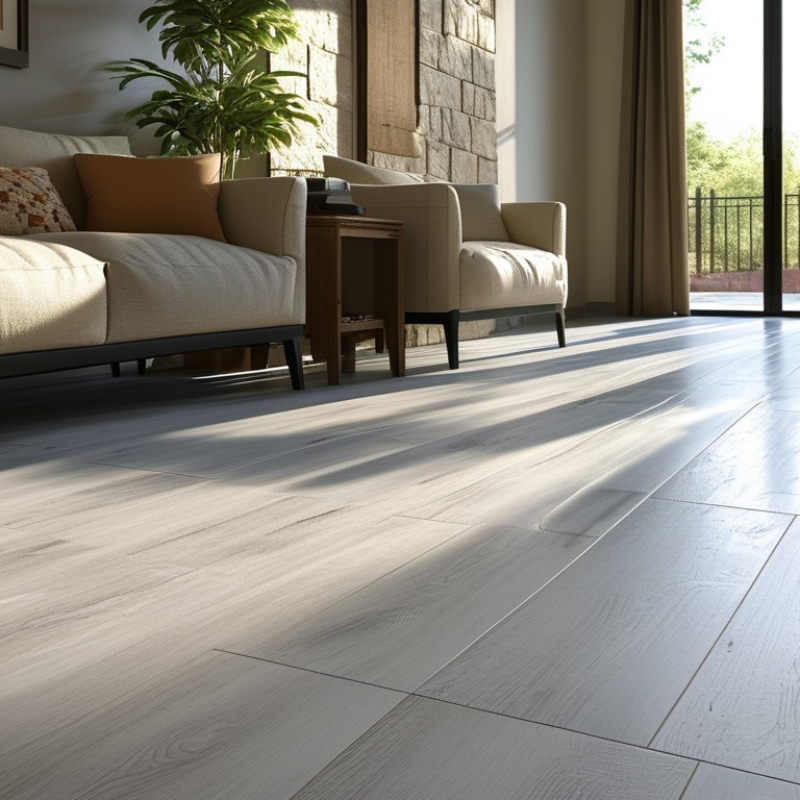
What Is Stone Plastic Flooring and Is It Durable?

What Is Stone Plastic Flooring?

Stone Plastic Flooring usually refers to stone plastic composite, or SPC, flooring. It combines limestone powder, polyvinyl chloride, and stabilizers into a rigid core. It is not a slab of natural stone. Instead, the core sits beneath a printed design layer and a protective wear layer. This structure creates a firm feel underfoot and helps reduce movement during temperature changes. Some products include attached underlayment, but construction varies.

In practical use, SPC flooring suits kitchens, hallways, bathrooms, and busy living areas. Its low water absorption helps protect the core from ordinary spills. The wear layer also resists scuffs from shoes and furniture. However, subfloor preparation matters more than many product descriptions suggest. Dust, dips, or hidden moisture can cause clicking sounds, movement, or separated joints. Installation should follow the technical instructions, including any required expansion space.

Is it durable? Often, yes, but it is not indestructible. Heavy furniture may dent a weaker surface, while sharp grit can create scratches. Direct sunlight may fade the printed layer when UV protection is limited. Use felt pads, sweep grit regularly, and wipe spills quickly. Before buying, check the wear-layer thickness, locking system, moisture guidance, and warranty terms. Repairability is another imperfect detail. A damaged plank may require replacement instead of sanding.

How Is Stone Plastic Flooring Made?

Stone plastic flooring, often called SPC flooring, is made from a rigid composite core. The main ingredients are limestone powder, PVC resin, and stabilizers. Manufacturers blend these materials under controlled heat. The mixture then passes through an extruder, which forms a dense, flat core.

A decorative film is pressed onto the core. It can imitate oak grain, slate texture, or pale concrete. Above it, a transparent wear layer protects the printed surface. Many products also receive a UV coating for better resistance to sunlight and scuffing. The panels are cooled, cut, and shaped with click-lock edges. Some include an attached underlay, but that layer does not fix an uneven subfloor. Manufacturing is consistent, yet small variations can occur between production batches.

Tips Check the wear-layer thickness, core density, and installation instructions. Store planks indoors before fitting them. Leave the recommended expansion gap near walls. Moisture testing matters, especially over concrete. A rigid core resists dents better than soft vinyl, but heavy furniture can still mark it. Sharp grit may scratch the surface. I have found that careful subfloor preparation often affects performance more than the product name. That is easy to underestimate.

What Are the Main Types and Features?

Stone plastic flooring, often called SPC flooring, has a rigid core made from mineral powder and polymer resin. Its dense structure resists dents better than many soft vinyl floors. The surface usually includes a printed wood or stone pattern, a transparent wear layer, and sometimes a textured finish. It feels firm underfoot. It can also sound slightly hard without an acoustic underlayment.

The main type is click-lock SPC flooring. Its edges join without wet adhesive, making installation cleaner and easier for experienced installers. Another type uses glue-down sheets or planks, which can suit commercial spaces and rooms with unusual layouts. Loose-lay versions are also available, but they need a stable, smooth subfloor to prevent movement. Thickness, wear-layer depth, joint quality, and surface texture all affect long-term performance.

SPC flooring handles spills well because its core is highly water-resistant. However, water can still damage the subfloor if it enters open joints or wall edges. I would not call it indestructible. Heavy furniture may leave marks, and sharp grit can scratch the finish over time. In homes I have assessed, entrance mats and felt pads made a visible difference. Careful subfloor preparation matters too. Small uneven areas may create hollow sounds or stress the locking joints. Manufacturers’ installation instructions should guide expansion gaps, cleaning methods, and moisture testing.

What Is Stone Plastic Flooring and Is It Durable?

Stone plastic flooring, commonly called SPC flooring, is a rigid vinyl floor made with a stone-mineral and polymer core. The chart compares typical thickness ranges across common flooring types. A thicker product may offer greater structural stability, but durability also depends on wear-layer thickness, installation quality, moisture control, and subfloor preparation.

Typical product ranges shown in millimeters; specifications vary by product and application. SPC and WPC are waterproof-core flooring types, while LVT uses a flexible vinyl construction.

How Durable Is Stone Plastic Flooring?

Stone plastic flooring, often called SPC flooring, uses a mineral-filled rigid core beneath a printed surface and protective wear layer. Its durability depends more on construction than appearance. ISO 10582 classifies resilient flooring for use levels, including Class 23 for heavy domestic areas and Class 33 for heavy commercial spaces. A product tested for Class 33 should withstand demanding foot traffic better than an unclassified residential product.

The wear layer matters greatly. Common specifications range from 0.3 to 0.7 millimetres, while thicker layers usually resist scuffing and pattern loss longer. ASTM F3261 evaluates rigid polymeric core flooring through dimensional stability, indentation, and performance requirements. These tests are useful, but they do not recreate every home. Dragged furniture can still mark the surface.

Real performance depends on installation and maintenance. A level subfloor prevents hollow spots and joint stress. Felt pads, entrance mats, and prompt spill removal reduce everyday damage. In busy rooms, abrasive grit behaves like sandpaper under shoes. That detail is easy to underestimate. Independent indoor-air certifications, such as FloorScore, address emissions rather than wear resistance, so they should not be treated as durability proof. Some product claims also imply a 20-year service life, but actual results vary with traffic, sunlight, moisture, and cleaning habits. I would treat those claims as conditional, not guaranteed.

Where Is Stone Plastic Flooring Commonly Used?

Stone plastic flooring is commonly used in homes, offices, shops, and rental properties. Its rigid core handles daily foot traffic well. Many homeowners choose it for kitchens, hallways, dining areas, and living rooms. The surface resists moisture, making cleaning easier after spills.

Bathrooms and laundry rooms are also popular locations. However, careful installation still matters. Water can enter through poorly sealed edges or uneven subfloors. In commercial spaces, this flooring appears in boutiques, reception areas, classrooms, and small clinics. It creates a clean appearance without requiring complicated daily maintenance. Some property owners also use it in basements, where ordinary flooring may struggle with damp conditions. It is durable, but not indestructible.

Tips: Check the subfloor before installation. It should be dry, firm, and reasonably level. Use protective pads under heavy furniture. Sweep grit regularly, because small stones can create surface scratches. Avoid dragging metal equipment across the floor. One overlooked detail is temperature. Let the planks adjust indoors before fitting them. This reduces movement after installation. From practical inspections, edge protection seems especially important in busy entrances. Still, results vary with product quality, installation skill, and room conditions.

What Is Stone Plastic Flooring and Is It Durable? - Where Is Stone Plastic Flooring Commonly Used?

Data Dimension Typical Information Practical Meaning
Definition Stone plastic flooring, commonly called SPC flooring, is a rigid-core resilient floor covering made primarily from polyvinyl chloride and mineral filler, often calcium carbonate. The term “stone” refers to the mineral component in the core. The product is not a solid stone floor and is generally lighter and easier to install than natural stone.
Core Structure A typical SPC plank or tile includes a wear layer, printed decorative film, rigid mineral-polymer core, and a balancing or backing layer. The layered construction provides surface protection, dimensional stability, decorative flexibility, and improved comfort compared with hard masonry surfaces.
Typical Thickness Many residential and light-commercial products are approximately 3.5–8 mm thick, excluding or including an attached underlay depending on the specification. Thickness alone does not determine quality. Wear-layer thickness, locking-system design, core density, and subfloor preparation also affect performance.
Surface Wear Layer Common wear-layer specifications range from approximately 0.20–0.55 mm, although products vary by market and application. A thicker wear layer generally offers better resistance to abrasion and is more suitable for busy residential or commercial areas.
Durability SPC flooring is generally resistant to dents, everyday abrasion, and household impacts because its rigid core is more dimensionally stable than many softer flexible vinyl floors. It can provide a long service life when correctly selected, installed, and maintained, but it is not immune to scratches, chips, or damage from heavy point loads.
Water Resistance The SPC core itself is typically water-resistant, and many products are marketed as waterproof when the joints are correctly fitted. It is suitable for areas exposed to occasional spills. However, standing water can enter through poorly sealed edges or joints and may damage the subfloor.
Moisture-Sensitive Locations Common suitable areas include kitchens, bathrooms, laundry rooms, entrance halls, and basements, subject to the product’s installation instructions. Wet-room use depends on perimeter sealing, drainage, adhesive or click-system requirements, and local building practice. It should not be treated as a substitute for a fully waterproof room system.
Common Residential Uses Living rooms, bedrooms, dining areas, hallways, home offices, kitchens, bathrooms, and finished basements. Its wood, stone, and tile visuals allow one flooring style to continue across several rooms with relatively low routine maintenance.
Common Commercial Uses Retail spaces, offices, reception areas, cafés, hotel rooms, corridors, rental properties, and other light- to medium-traffic interiors. Commercial suitability depends on the wear-layer rating, installation method, rolling-load requirements, fire classification, and expected traffic level.
Subfloor Requirements The subfloor should be clean, dry, stable, sufficiently level, and free from loose material. Concrete subfloors may require moisture testing. Unevenness can cause joint stress, gaps, movement, or visible imperfections. Rigid flooring does not eliminate the need for proper subfloor preparation.
Installation Method Many products use a floating click-lock installation, while some are glued down. Expansion gaps may be required around walls and fixed objects. Floating installation can be faster and cleaner, but the floor must not be trapped beneath fixed cabinetry unless the product instructions specifically permit it.
Maintenance Routine care usually consists of sweeping or vacuuming, prompt removal of spills, and damp mopping with a cleaner recommended for resilient flooring. Regular cleaning helps prevent grit from acting as an abrasive. Excessive water, steam cleaning, harsh chemicals, and abrasive tools may damage the finish.
Temperature Stability The rigid core offers good dimensional stability, but direct sunlight, rapid temperature changes, and extreme heat can still cause movement or discoloration. Use window coverings where necessary and follow the manufacturer’s limits for indoor temperature, acclimation, and installation conditions.
Furniture and Heavy Loads Normal household furniture is generally acceptable when it has suitable protective pads and is moved rather than dragged. Very heavy furniture, narrow casters, sharp legs, and concentrated loads can dent, separate, or damage planks. Wide, non-staining protectors are preferable.
Comfort and Sound SPC flooring is harder underfoot than flexible vinyl and may sound more resonant without an acoustic underlay or suitable subfloor. Underlay selection can improve sound and comfort, but only products approved for the flooring system should be used because excessive softness may stress click joints.
Key Limitations Potential issues include scratching from abrasive grit, chipped edges from impact, visible subfloor irregularities, joint separation from poor installation, and thermal movement. Its durability is highly dependent on product specification, site conditions, installation quality, and daily use rather than on the “stone” description alone.
Overall Assessment SPC flooring is a durable, low-maintenance option for many residential and light-commercial interiors, particularly where water resistance and dimensional stability are important. Choose the wear layer and performance classification according to traffic, verify moisture and subfloor conditions, and follow the installation and care instructions for the selected product.
SERVO-ROBOT Inc
Privacy Overview

This website uses cookies so that we can provide you with the best user experience possible. Cookie information is stored in your browser and performs functions such as recognising you when you return to our website and helping our team to understand which sections of the website you find most interesting and useful.