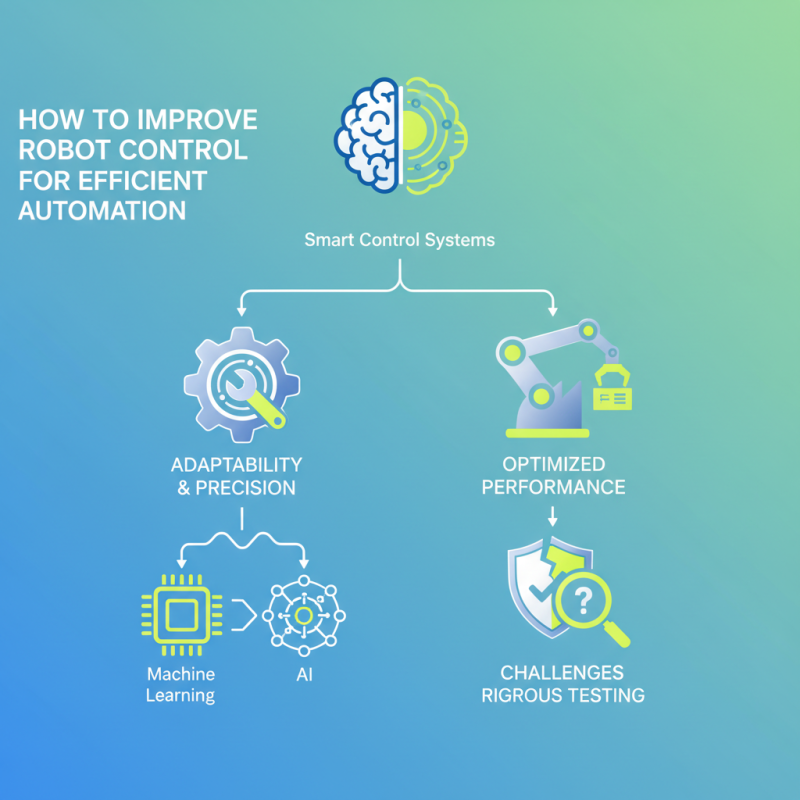
In the rapidly evolving field of automation, enhancing robot control is crucial for achieving efficiency. Dr. Emily Chen, a leader in robotics research, states, "Effective robot control systems can revolutionize operations across industries." This insight underscores the importance of refining control mechanisms to optimize robot performance.
The challenges in robot control are significant. Current systems often struggle with adaptability and precision. As robots are integrated into various sectors, these limitations can hinder productivity. Addressing these issues demands innovative solutions and a thorough understanding of control strategies.
To improve robot control, adopting new technologies is essential. Machine learning and AI present opportunities to create smarter robots. However, the implementation is not without flaws. These advanced systems require rigorous testing to ensure reliability. By acknowledging the imperfections in current methodologies, we can pave the way for significant advancements in robot control.
Enhancing robot precision is crucial for efficient automation. According to a report by the International Federation of Robotics, 2022 saw a 20% rise in industrial robot installations. This increase highlights the growing emphasis on precision in automated systems.
One strategy for improvement is implementing advanced sensors. These devices gather real-time data about a robot's environment. Enhanced sensor technology can reduce errors in tasks like assembly, sorting, and packaging. In a manufacturing setting, precise movement can lead to a 30% decrease in wasted materials, which saves costs and boosts productivity.
Another important factor is algorithm optimization. Many robots rely on machine learning to adapt their movements. However, the algorithms are not always perfect. Limited data sets can result in slower learning curves. Addressing these limitations through rigorous testing can lead to better performance. Reports show that companies investing in algorithmic improvements see an average efficiency increase of 15-25%. This data underscores the necessity for continual evaluation and refinement in robotic operations.
This chart illustrates the precision improvement strategies in robotic control systems through various dimensions, showing their effectiveness in enhancing automation.
Integrating artificial intelligence (AI) into robot control has brought significant advancements. AI enhances a robot’s ability to perform tasks with remarkable efficiency. For instance, an AI-driven robot can learn from its mistakes, adapt to new environments, and optimize its operations in real-time. This capability is crucial in environments where conditions change rapidly.
One area needing further enhancement is the interpretability of AI decisions. Understanding why a robot makes certain choices can be challenging. Developers sometimes face difficulties aligning AI behavior with human expectations. In manufacturing settings, misinterpretation can lead to errors. Addressing these challenges will elevate the reliability of robots in practical applications.
Moreover, integrating AI requires continuous learning and improvement. Robots need ongoing training to adapt to evolving demands. Data collection and processing remain vital. However, over-reliance on AI can result in complacency among human operators. Striking a balance between automation and human oversight remains essential. As we refine these systems, the integration of AI will become even smoother, allowing robots to work alongside humans effectively.
Sensor technologies play a crucial role in enhancing robot feedback mechanisms. They provide real-time data to improve robotic responsiveness. Research indicates that robots with advanced sensors can increase operational efficiency by up to 30%. These sensors enable machines to detect environmental changes swiftly. For instance, proximity sensors help robots navigate complex terrains without collisions.
Moreover, integrating artificial intelligence with sensor data creates adaptive systems. These systems can learn from their surroundings and improve over time. A study from the International Federation of Robotics noted that automation solutions utilizing enhanced feedback mechanisms experienced a productivity increase of 25% in manufacturing settings. However, the challenge lies in the calibration of these sensors. Misalignment or sensor drift can lead to inaccuracies, potentially causing operational delays.
The design of feedback loops is equally important. High-quality data from sensors can inform robots of necessary adjustments. Yet, not all sensors provide reliable information. Distinct environmental factors can degrade sensor performance. Consequently, engineers should continuously evaluate and strengthen sensor reliability. This critical reflection is essential for effective robot control, pushing the boundaries of automation efficiency.
| Sensor Type | Purpose | Feedback Mechanism | Implementation Benefits |
|---|---|---|---|
| Lidar | Distance Measurement | Real-time Mapping | Enhanced Navigation |
| Infrared Sensors | Obstacle Detection | Collision Avoidance | Improved Safety |
| Ultrasonic Sensors | Proximity Sensing | Distance Feedback | Accurate Positioning |
| Accelerometers | Motion Detection | Stability Monitoring | Enhanced Control |
| Cameras (Vision Sensors) | Image Processing | Visual Feedback | Better Interaction |
In the realm of automation, optimizing communication protocols between robots and control systems is crucial. Research shows that up to 30% of downtime in robotic systems stems from communication inefficiencies. Real-time data exchange can significantly enhance response times and overall productivity.
Robots rely heavily on protocols such as MQTT and REST to communicate with control systems. These frameworks need to be tailored for low-latency environments. A study by the International Federation of Robotics indicates that improving protocol efficiency by just 10% can lead to cost savings of up to 15% in large-scale operations.
Nevertheless, many companies struggle to implement these optimizations effectively.
Addressing the potential for errors in communication is vital. Latency issues can result in misalignment of tasks between robots. As it stands, many systems still experience delays due to outdated communication infrastructure. Regular assessments of both hardware and software can reveal weaknesses, leading to more robust protocols. The industry must embrace continuous improvement to fully realize the benefits of efficient automation.
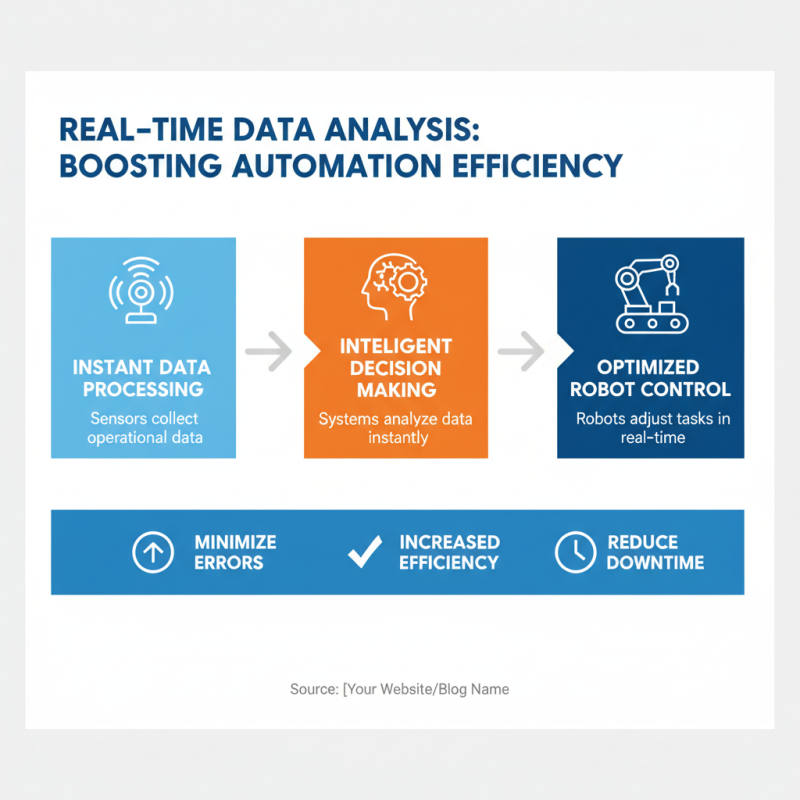
Real-time data analysis is revolutionizing robot control systems. By processing data instantly, robots can respond to their environment more efficiently. This allows for quicker adjustments in their tasks. For example, consider a robotic arm in a manufacturing plant. It can analyze the speed of a conveyor belt and adjust its grip in real-time. This precise control minimizes errors and reduces downtime.
However, implementing real-time data analysis is not without its challenges. Latency can be an issue, especially in complex environments. If data processing takes too long, the robot's performance may suffer. Furthermore, there can be pitfalls in data interpretation. Poorly calibrated sensors can lead to false readings, affecting the robot's actions. Addressing these challenges requires a keen understanding of both technology and operational needs.
In many cases, teams must revisit their data workflows. Integrating new data sources can be cumbersome. It requires a balance between accuracy and speed. Continuous monitoring and adjustments are essential. The goal is effective automation. Valuable insights lead to enhanced control strategies. Over time, these improvements can translate to higher productivity and efficiency in various applications.