
How to Choose the Right Laser Robot for Your Business?

Choosing the right laser robot begins with your production reality, not a glossy specification sheet. Examine the material, thickness, tolerances, cycle time, workspace, and operator skills. A system cutting thin stainless steel may fail when processing reflective aluminum or heavy plate. Small details matter. Ask for sample tests using your own parts, fixtures, and surface conditions.

Joseph Engelberger, widely regarded as the father of industrial robotics, said, “I can’t define a robot, but I know one when I see one.” His observation remains useful. A laser robot should be judged by repeatable results, safe integration, and practical service support. It is not simply a robotic arm with a laser head. The complete solution may include a laser source, optics, software, sensors, extraction, guarding, and programming tools. Check beam quality, power stability, positioning accuracy, and replacement costs. Also examine training, remote assistance, spare parts, and local technical coverage. These factors often decide whether the investment performs smoothly after installation.

Be realistic about automation goals. Full autonomy sounds attractive, but inconsistent loading or difficult programming may reduce actual output. I have seen buyers focus on maximum laser power while overlooking fixture changeover time. That mistake can be expensive. A careful supplier should explain limitations, not only advantages. Request documented case studies, measurable acceptance criteria, and a clear maintenance plan. Then compare the laser robot against your future workload, not only today’s order book. The best choice is rarely the most powerful machine. It is the one that delivers reliable quality, manageable operating costs, and room for responsible growth.
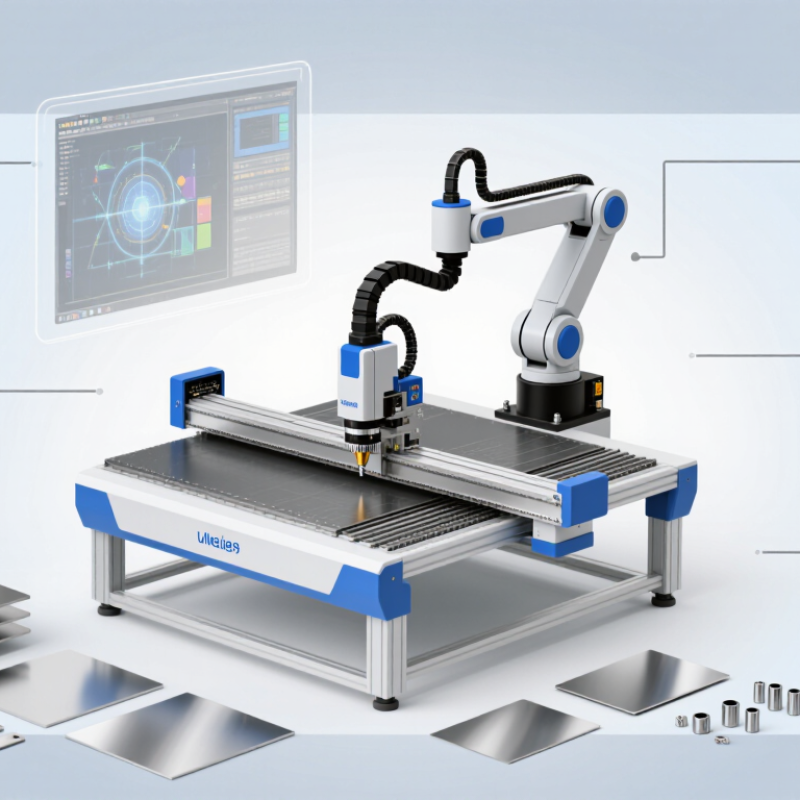
How to Choose the Right Laser Robot for Your Business?

Define Your Laser Processing Requirements

Choosing a laser robot starts with the work, not the machine. Define the material, thickness, part size, and required finish. Steel, aluminum, and composites behave differently under heat. Small variations can change cutting speed and edge quality.

Measure the real work envelope. A robot may reach the outer surface but miss a deep corner. Record fixture height, part weight, access angles, and loading space. Include the laser head, hoses, clamps, and safety enclosure in your measurements. Payload calculations should cover every moving component, not only the workpiece.

Set measurable targets for accuracy, cycle time, kerf width, and daily production volume. Request sample trials using your own materials and typical joint designs. Inspect dross, heat distortion, and surface discoloration afterward. Ask for repeatability data under continuous operation, not only laboratory conditions. That detail matters.

Safety planning needs equal attention. Specify guarded zones, door interlocks, fume extraction, emergency stops, and operator training. Requirements may change when the robot is integrated with conveyors or positioners. Review the complete cell with a qualified safety professional. A fast robot is not useful if workers cannot load it comfortably. Poor access can create delays. It can also invite unsafe shortcuts.

Leave room for uncertainty. Early calculations are often optimistic. A fixture that looks simple may take several minutes to align. Recheck your assumptions with operators, maintenance staff, and production records before selecting the laser robot.

Compare Robot Types, Reach, Payload, and Precision

How to Choose the Right Laser Robot for Your Business?

Choosing a laser robot starts with the process, not the product catalog. In practical evaluations, I compare articulated, SCARA, Cartesian, and collaborative robots against real motion paths. Articulated robots handle angled surfaces and wide work envelopes effectively. SCARA robots offer fast movement across flat fixtures. Cartesian systems provide predictable linear travel and simpler programming. Collaborative robots can support flexible, low-volume work, although safety limits may reduce their speed. No single type fits every workshop.

Reach should cover the complete workspace without forcing extreme wrist angles. Extra reach sounds helpful, but it can reduce stiffness and accuracy.

Payload includes the laser head, cables, fixtures, and any workpiece held by the robot. A heavier tool may require stronger motors and slower acceleration. Check the entire load, not only the robot’s advertised capacity.

Precision also deserves careful testing. Repeatability describes how closely the robot returns to one position, while accuracy concerns the true position. That distinction matters.

Test sample cuts, scan corners, and inspect small features under normal production temperatures. Calibration and rigid fixturing often influence results more than expected.

I have seen specifications look excellent, yet vibration affected edge quality. That uncomfortable finding is worth accepting before purchase.

A pilot test may reveal weaknesses that a spreadsheet misses.

Evaluate Laser Sources, Optics, and Safety Systems

How to Choose the Right Laser Robot for Your Business?

Evaluate the laser source before comparing robot speed. Fiber lasers often suit metal cutting, welding, and marking. CO2 sources can perform well on selected non-metal materials. Source power alone can mislead. Check beam quality, pulse control, wavelength, duty cycle, and expected service life. Match these specifications with your material thickness and production volume. A short sample test may reveal more than a polished brochure.

Optics deserve equal attention. Inspect the focusing lens, protective window, beam delivery path, and focal-length options. A dirty protective window can reduce cutting quality and create costly downtime. Confirm that the robot maintains stable focus across its working envelope. Safety systems must include a suitable enclosure, access interlocks, emergency stops, warning indicators, and controlled maintenance access. A documented risk assessment should guide the design. Training matters too. Even advanced automation can become unsafe when operators bypass small procedures under production pressure. That weakness is easy to underestimate.

Tips: Request test samples using your actual material. Measure edge quality, heat marks, cycle time, and rejected parts. Ask how often optics need inspection and replacement. Verify safety functions during acceptance testing, not only during installation. Leave room for honest doubt. A machine that wins on speed may lose on reliability, maintenance, or operator confidence.

Assess Integration, Software, and Operating Costs

How to Choose the Right Laser Robot for Your Business?

A laser robot should fit your production system, not operate as an isolated machine. Check communication with your PLC, MES, sensors, and existing safety controls. Confirm whether the robot supports common industrial protocols and accessible APIs. Integration problems often appear after installation. Cable routing, calibration space, and signal delays can add unexpected hours. During a pilot, test one complete production cycle with real materials, fixtures, and operators. A short demonstration is not enough.

Software deserves equal attention. Look for clear programming tools, simulation functions, automatic fault records, and permission controls. Operators should adjust approved parameters without editing complex code. The interface must show errors in practical language, not cryptic numbers. Ask how software updates are tested and restored. Cybersecurity also matters when the robot connects to a factory network. A reliable supplier should provide documentation, training, and responsive technical support. Do not accept vague promises.

Operating cost extends beyond the purchase price. Estimate electricity, protective lenses, nozzles, filters, gas, spare parts, service visits, and employee training. Include planned downtime. Compare these costs with expected throughput and product quality. One expensive component can change the calculation. I have seen businesses focus on cycle time while ignoring maintenance access. That mistake becomes costly. Review a twelve-month cost model, then challenge every assumption. Your estimate may still be wrong. That is useful information before committing capital.

Verify Supplier Support, Testing, and Expected ROI

How to Choose the Right Laser Robot for Your Business?

A laser robot should fit your production reality, not only your equipment list. Ask the supplier to inspect your materials, joint designs, cycle times, and floor space. Request sample testing with your actual components. A polished demonstration is not enough. It may hide awkward angles, heat distortion, or slow repositioning.

Supplier support often decides whether the system succeeds. Confirm installation tasks, operator training, remote response times, and spare-part availability. Ask who handles software updates and process adjustments. Get these details in writing. During testing, measure cycle time, repeatability, energy use, finished quality, and material waste. Record the results under normal shop conditions, including short breaks and routine cleaning. Small details matter.

ROI needs a practical model. Compare labor savings, higher output, reduced rework, maintenance costs, integration fees, and training time. Use conservative numbers. Our first estimate was too optimistic because it ignored fixture changes and setup delays. That mistake was useful. It showed why a supplier should provide a transparent test report and realistic production assumptions. Ask for a pilot run before full deployment. Check whether the robot can handle tomorrow’s product variations, not just today’s easiest part. A lower purchase price may become expensive if support is slow or testing is limited. Reliability is measured after installation.

SERVO-ROBOT Inc
Privacy Overview

This website uses cookies so that we can provide you with the best user experience possible. Cookie information is stored in your browser and performs functions such as recognising you when you return to our website and helping our team to understand which sections of the website you find most interesting and useful.