How to Choose Roth Orthodontic Brackets in 2026?
Choosing Roth brackets in 2026 requires more than comparing prices, prescriptions, or glossy product photographs. Roth Brackets Orthodontics connects bracket design with treatment objectives, facial balance, occlusal function, and long-term stability. Dr. Ronald H. Roth, whose philosophy influenced this prescription, emphasized that orthodontic treatment should pursue “facial harmony, functional occlusion, and stability,” rather than merely straight teeth. This principle remains useful, although every patient challenges simple rules.
A reliable selection process begins with the patient, not the catalog. Examine malocclusion, arch form, periodontal condition, growth status, and planned mechanics. Then assess bracket slot accuracy, base adaptation, torque expression, rotational control, material quality, and supplier traceability. Stainless steel may offer predictable handling, while ceramic options can improve appearance but demand careful debonding technique. Digital setups can support planning, yet they cannot guarantee biological responses.
Clinical experience matters. A bracket may perform well in one practice and disappoint in another. Bonding moisture, wire sequence, operator habits, and finishing goals all influence results. That is easy to overlook.
The strongest 2026 choice should balance evidence, patient expectations, clinician skill, and verified manufacturing standards. Avoid selecting a system because it is fashionable. Avoid rejecting older prescriptions without examining their clinical logic. Even experienced orthodontists must reassess assumptions when new evidence appears. This introduction will compare the practical features, limitations, and decision points that help clinicians choose Roth brackets responsibly. The process is not perfectly linear. Good judgment still includes uncertainty.
Understanding Roth Orthodontic Brackets and Their Main Features
How to Choose Roth Orthodontic Brackets in 2026?
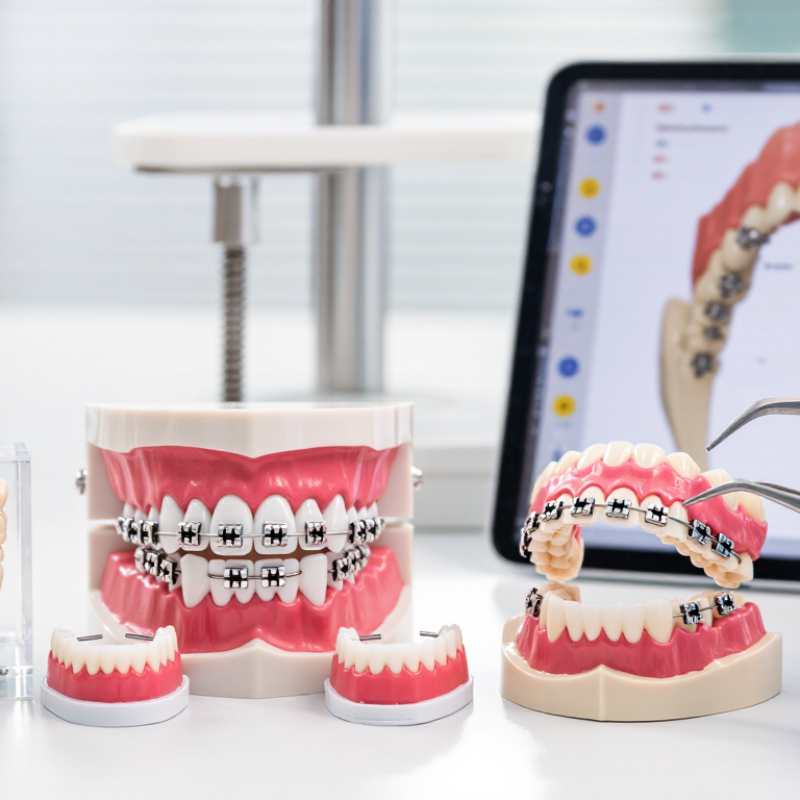
Roth orthodontic brackets use a built-in prescription for tip, torque, and in-out positioning. These values guide tooth movement through the archwire. Their rounded edges can reduce irritation around the lips and cheeks. Many designs also include tie wings, auxiliary hooks, and different slot dimensions.
A smaller profile may feel less bulky, but it can reduce handling space. That trade-off matters.
Grand View Research’s 2024 Orthodontic Supplies Market report places the global market above USD 2 billion, with high-single-digit growth expected through 2030. More choices do not always mean better treatment. Check the bracket’s manufacturing tolerance, slot accuracy, base design, and bonding instructions.
Stainless steel usually offers strength and predictable handling. Ceramic options may improve appearance, yet they can require more careful debonding. Clinical studies often compare complete systems, not brackets alone.
A practical choice starts with the clinician’s prescription and treatment mechanics. Ask whether the bracket matches the planned wire sequence and finishing method. Verify available replacement units and consistent quality control.
Do not choose by appearance alone. I would not claim that one Roth design fits every patient. Some prescriptions still need individual bends or repositioning. That is where the theory meets real teeth.
Assessing Patient Needs Before Selecting Roth Brackets
How to Choose Roth Orthodontic Brackets in 2026?
Assessing patient needs should guide every Roth bracket decision. A bracket is not suitable simply because it is familiar or affordable. The orthodontist should review photographs, radiographs, periodontal findings, and the patient’s bite before selecting a prescription.
Small details matter. Crowding, rotations, deep bites, and tooth-size differences can change the required control. A patient with weak enamel or poor brushing may need a simpler plan and closer hygiene monitoring. Swollen gums, heavy plaque, or untreated decay should be addressed before bonding. Do not guess.
I have found that patient habits often influence bracket selection more than expected. A teenager who plays contact sports may need clear protection and practical instructions. An adult with limited appointment availability may benefit from a plan that reduces avoidable adjustments, when clinically appropriate. Material sensitivity, previous dental work, and comfort expectations also deserve direct discussion.
Roth brackets can support controlled tooth movement, but their performance depends on accurate placement, suitable archwires, and regular reviews.
The clinician should explain possible discomfort, cleaning demands, treatment time, and refinements in plain language.
Digital scans can improve planning, although they do not replace clinical judgment. Even experienced practitioners can misjudge cooperation or underestimate hygiene challenges. That possibility should remain visible during consent and follow-up.
Patient needs evolve. Reassessment may lead to modified mechanics, different auxiliaries, or a revised treatment schedule.
Comparing Bracket Materials, Designs, and Prescription Options
Choosing Roth orthodontic brackets in 2026 requires more than selecting a familiar prescription. The bracket should match the treatment plan, enamel condition, bite, and patient priorities. Stainless steel remains practical because of its strength and predictable slot dimensions. Ceramic brackets offer a less visible appearance, but they may be more brittle and harder to remove. Some patients also notice bulk near the lips. Small details matter.
Bracket design affects daily handling. Conventional brackets use elastic modules, while self-ligating designs use clips. Neither design guarantees faster treatment. Cleanability, friction behavior, wire control, and clinician familiarity deserve greater attention. A low-profile bracket may improve comfort, yet its shape can limit certain wire adjustments. Published evidence remains mixed, so promotional claims should not replace measurable clinical outcomes. No bracket is perfect.
Prescription options also require careful interpretation. A Roth prescription sets built-in torque, angulation, and in-out values, but these numbers vary between systems. The selected values should support planned tooth positions, not dictate them. Slot size affects wire selection and finishing control. Ask how the orthodontist will manage rotations, deep bites, and final detailing. An experienced clinician should explain trade-offs clearly and document alternatives. I would not choose by appearance alone. That shortcut can be expensive. Even an apparently ideal bracket may require compensating bends when tooth anatomy differs from the original plan.
Evaluating Comfort, Treatment Efficiency, and Clinical Compatibility
How to Choose Roth Orthodontic Brackets in 2026?
Comfort should be assessed beyond the first fitting. A well-finished bracket has smooth edges and a secure base. It should reduce cheek irritation during speaking, eating, and sleep. Patients often notice discomfort where the archwire extends near the molars. Proper trimming and protective wax can help, but wax is not a permanent solution. Bracket comfort also depends on tooth position, oral habits, and individual sensitivity.
Treatment efficiency requires more than a bracket’s prescription. Accurate placement is critical. A small vertical error may affect torque, rotation, or finishing movements. Clinicians should evaluate slot precision, ligation performance, and compatibility with planned archwires. The bracket must also suit the patient’s enamel condition, bite pattern, and expected treatment complexity. Clinical records, photographs, and radiographs support safer decisions. Still, no system removes the need for careful adjustments.
Tips: Ask how the brackets feel against the cheeks. Check whether cleaning tools can reach around each base. Discuss the treatment plan, wire sequence, and likely adjustment intervals. Request an explanation of possible refinements. A bracket that looks efficient in theory may perform differently in a crowded arch. That matters. Patient feedback should be recorded throughout treatment, not only during emergencies. My own view is that comfort and efficiency can conflict slightly, so the best choice often requires compromise.
How to Choose Roth Orthodontic Brackets in 2026?
Evaluating comfort, treatment efficiency, and clinical compatibility with a brand-neutral decision framework.
The chart uses a normalized 10-point clinical planning index rather than brand-specific claims. Comfort reflects low-profile design, smooth surfaces, and soft-tissue interaction; treatment efficiency reflects wire engagement, control, and finishing flexibility; clinical compatibility reflects prescription options, slot selection, bonding adaptability, and suitability across common malocclusions. Actual outcomes depend on diagnosis, biomechanics, clinician technique, patient cooperation, and oral-hygiene conditions.
Making an Informed Roth Bracket Choice for Different Cases
How to Choose Roth Orthodontic Brackets in 2026?
Making an Informed Roth Bracket Choice for Different Cases
Roth brackets should match the patient’s occlusion, not simply follow a familiar prescription. For mild crowding, standard torque and angulation may provide efficient control with fewer wire adjustments. Rotated teeth need reliable engagement and careful finishing. Extraction cases often require stronger anchorage planning, controlled retraction, and closer monitoring of incisor torque. The bracket is only one part of that system.
Material and slot design also deserve practical attention. Stainless steel usually offers predictable durability, while ceramic options may improve appearance but can increase friction or fracture risk. Hygiene matters too. A 2023 American Association of Orthodontists report estimated 4.5 million orthodontic patients in the United States and Canada, showing how widely varied treatment needs can be. One solution cannot suit every mouth.
Evidence should temper confident claims. A Cochrane Database of Systematic Reviews assessment found low-certainty evidence that bracket designs meaningfully reduce overall treatment time. That finding challenges sales-driven assumptions. In my clinical view, wire sequencing, bonding accuracy, and patient attendance often influence results more than the Roth label. I may still choose a familiar system for consistency, but familiarity can hide weak reasoning. Review the setup, expected movements, enamel condition, and retainer plan before selecting the prescription. Small adjustments can matter.